Last reviewed October 2026.
Hemp THC and CBD reach your bloodstream by one of three routes: the lungs, the gut and liver, or the lining of the mouth. The route decides how fast you feel it, how long it lasts and how much of the dose your body actually uses. Inhaled THC is felt in seconds to minutes. Swallowed THC, from edibles and drinks, is processed by the liver into a second active compound and arrives later. CBD oil held under the tongue is mostly swallowed in practice, which is why clinical studies find it peaking on roughly the same clock as an edible. Below is what the research shows for each format, and where it runs out.
The three routes, in plain terms
- Lungs (smoking and vaping). THC crosses into the blood almost immediately. In one controlled study, blood levels peaked about 9 minutes after smoking began (Huestis, 2007).
- Gut and liver (edibles and drinks). THC is absorbed from the digestive tract and passes through the liver before it reaches the rest of the body. Effects begin within 30 minutes to 2 hours (Health Canada).
- Mouth lining (sublingual drops). In theory, oil held under the tongue absorbs directly. In practice most of it is swallowed and takes the gut-and-liver route.
How much of the dose your body actually uses
"Bioavailability" is the share of a dose that reaches your bloodstream. For cannabinoids it is low by any route, and highly variable.
| Route | What studies report | Source |
|---|---|---|
| Smoked THC | 2–56%, with a later estimate of about 8–24%. Varies with how deeply and how long someone inhales | Huestis, 2007 |
| Oral THC (edibles) | About 4–20%, reduced by first-pass processing in the liver | Huestis, 2007 |
| THC drinks | No reliable figure. Studies are few and formulations differ widely | Froude et al., 2024 |
| Smoked CBD | About 31% (a five-person study) | Millar et al., 2018 |
| Oral CBD | 13–19%, an older estimate cited in the review; direct human data is sparse | Millar et al., 2018 |
Two lessons follow. First, a higher bioavailability does not make a format "stronger" in any useful sense, because nobody knows exactly what share of a puff they took in. Second, the milligram count on a can or gummy is the most dependable number you have. It is why measured formats are easier to repeat from one night to the next.
Why edibles feel different: 11-hydroxy-THC
When THC passes through the liver, part of it is converted to 11-hydroxy-THC, which is also psychoactive. Smoking produces relatively little of it: after smoking, blood levels of 11-hydroxy-THC are only about 10% of THC levels, far lower than after eating (Huestis, 2007). Swallowed THC also peaks late. Studies in the same review put peak blood levels anywhere from 1 to 6 hours after eating, and note that oral onset is "delayed" with "lower" peaks than smoking.
That combination, a late arrival plus a second active compound, is the usual explanation for why edibles can feel heavier and longer than the same milligrams smoked. It is also why they are easy to overdo. The National Institute on Drug Abuse notes that because "edibles typically take longer to show effects," people "may use more of a product as a result" (NIDA). In one Denver hospital study, edibles accounted for 10.7% of cannabis-related emergency visits in 2014–2016 while representing only 0.32% of Colorado cannabis sales (Monte et al., Annals of Internal Medicine, 2019).
Where drinks fit
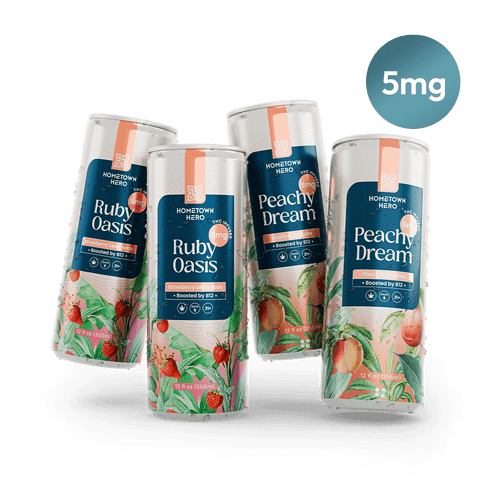
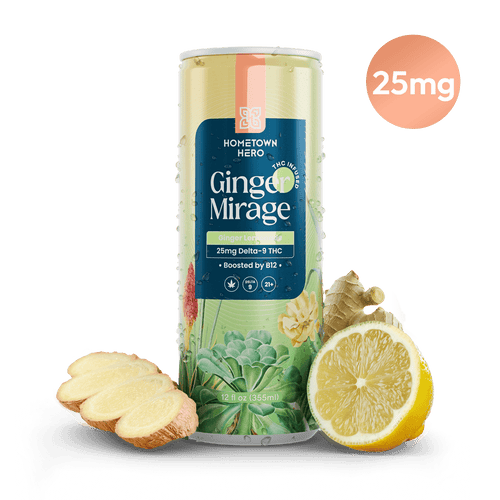
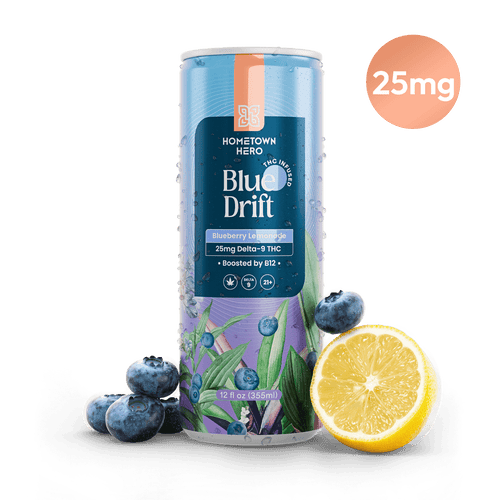
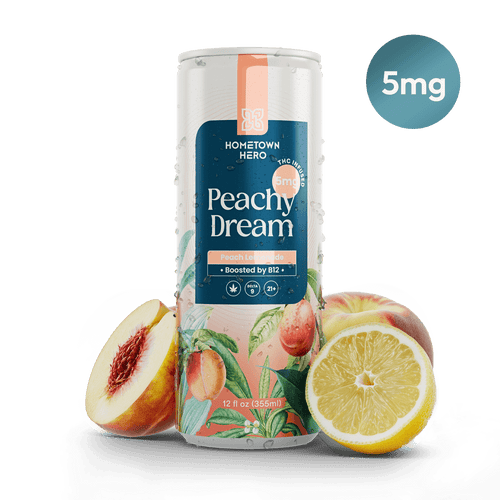
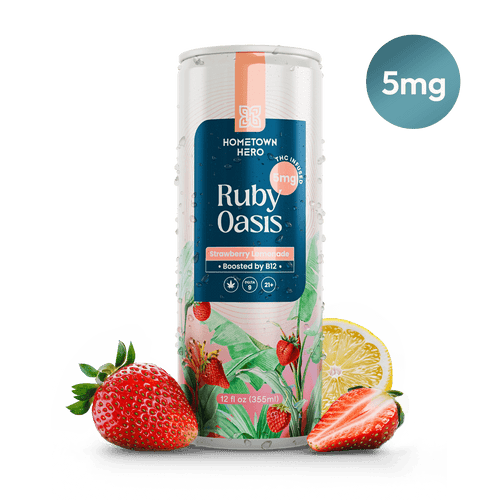
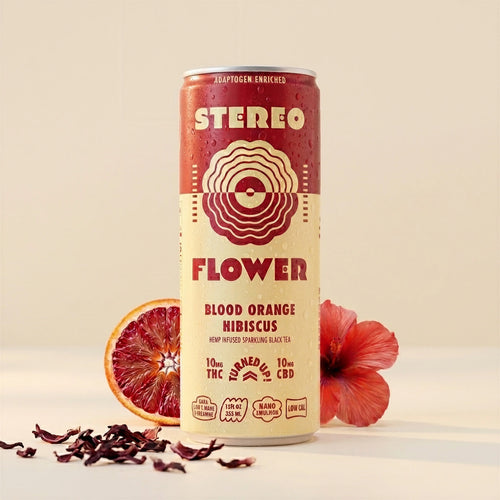
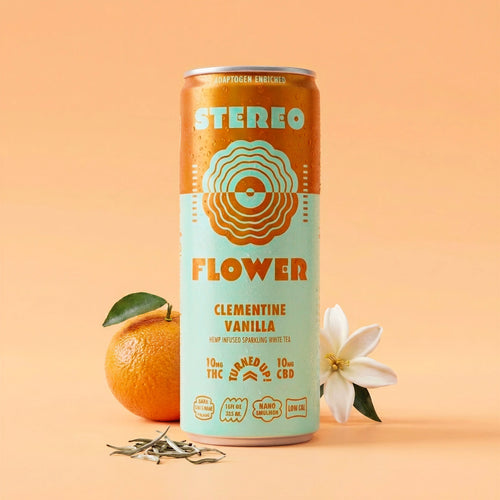
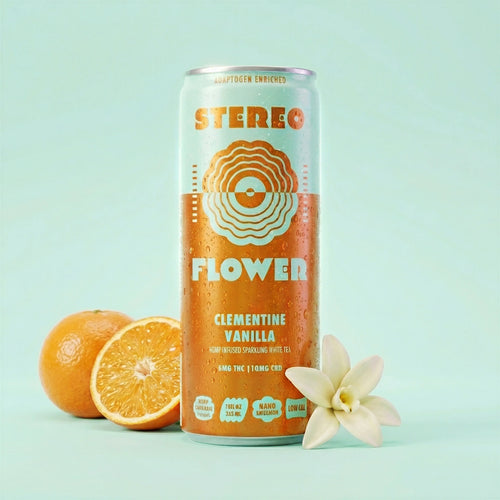
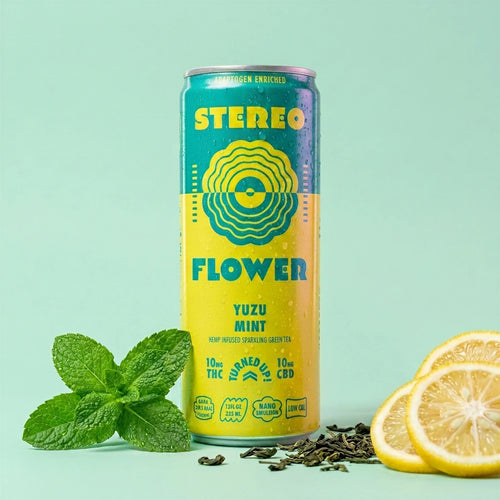
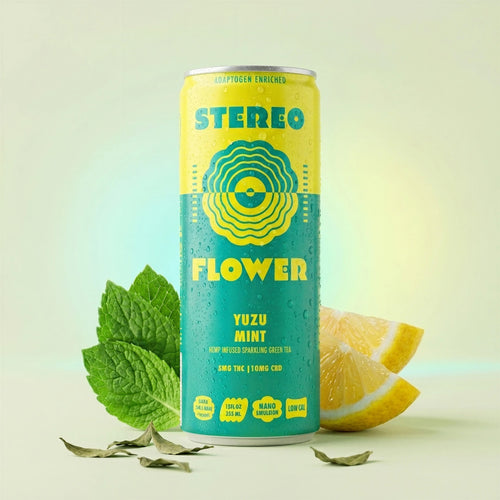
A THC drink is swallowed, so it shares the edible's route through the gut and liver. What differs is the form the THC arrives in. Because THC is oil-based, beverage makers use nano-emulsion to break it into tiny droplets that stay mixed in water, and those droplets are intended to absorb faster than THC locked in a gummy.
The evidence on how much faster is honest about its limits. Harvard Health writes that "some people say" they feel cannabis drinks within 15 to 20 minutes, much faster than a gummy or brownie, which typically takes 30 to 90 minutes (Harvard Health). A 2024 peer-reviewed review of the beverage research calls the findings inconsistent, "further exacerbated by the sheer diversity of formulations investigated," and links delayed intoxication from oral cannabis to increased overdose risk (Froude et al., 2024). Our house standard reflects both: drinks are often felt within 15–20 minutes, though it varies by product and person, and you should wait a full hour before having more. The details are in how long THC drinks take to kick in.
The sublingual myth
CBD tinctures are usually sold as fast-acting because you hold them under your tongue. The clinical data is less flattering. A 2018 systematic review of CBD pharmacokinetics in humans found that sublingual drops reached peak blood levels at about 1.7 and 2.2 hours in the two groups studied, and that swallowed CBD mostly peaked between 1 and 4 hours (Millar et al., 2018). An oromucosal spray peaked between 1.6 and 4.2 hours. In other words, the under-the-tongue step did not produce the quick onset the label implies, most likely because much of the oil is swallowed before it can absorb.
The same review found food matters more than technique. In one study it cites, total CBD absorption was about five times higher, and peak levels about three times higher, when taken with food than on an empty stomach. If you use CBD drops, taking them at the same point relative to meals will do more for consistency than how long you hold them under your tongue.
Smoking: fastest, least measurable, hardest on the lungs
Inhaled THC is felt within seconds to minutes (Health Canada), and blood levels fall quickly, dropping to low levels within about 2 hours in controlled studies (Huestis, 2007). That makes inhalation the easiest format to stop as soon as you feel something, which is its genuine advantage.
The costs are just as real. There is no milligram count on a puff, and the share absorbed swings with how someone inhales. And the CDC states that cannabis smoke "has many of the same toxins, irritants, and carcinogens (cancer-causing chemicals) as tobacco smoke," that smoked cannabis "can harm lung tissues," and that smoking raises the risk of bronchitis, cough and mucus production (CDC). Drinks, edibles and oils skip the lungs entirely.
The label is part of the dose
A format can only be as precise as its label. When researchers bought 84 CBD extracts online and tested them, 31% were within 10% of the labeled CBD, 43% contained more and 26% contained less; THC turned up in 18 of the 84 (Bonn-Miller et al., JAMA, 2017). The beverage review found inaccurate labeling among drinks too (Froude et al., 2024). Whatever format you choose, read the third-party lab report. Ours are on the certificates of analysis page, and how to read a COA walks through one line by line.
What this means when you choose
- If you want to feel it fast and stop on cue, inhalation does that, at a cost to your lungs and with no measured dose.
- If you want a dose you can repeat, choose a format with a milligram count: a drink or an edible.
- If you want something smoke-free that arrives sooner than an edible, a drink is the usual pick. Plan for the long end anyway.
- If you want effects that last through an evening, an edible lasts longest. Take it early and do not stack doses.
- If you want CBD without intoxication, drops and CBD drinks both work. Expect drops to peak on an edible-like clock, and take them consistently with food.
New to THC? Start at 2.5–5mg with a low-dose drink and see our dosage guide. For the quick version of everything above, see the side-by-side comparison of all four formats, and for picking by occasion, drink, gummy, dropper or joint.
A note on the law
From December 11, 2026, the federal hemp definition counts total THC, including THCA, and caps finished hemp products at 0.4mg of total THC per container. That reaches drinks, edibles, oils and THCA-rich hemp flower alike. See what the federal hemp law means for THC drinks and the federal bill tracker.
Frequently asked questions
What is the bioavailability of THC by method? Studies report about 4 to 20 percent for swallowed THC and a wide 2 to 56 percent for smoked THC, depending on how someone inhales. There is no reliable figure for THC drinks yet, because studies are few and formulations differ widely.
Why do edibles feel stronger than smoking? Swallowed THC passes through the liver, which converts part of it into 11-hydroxy-THC, another active compound. Smoking produces much less of it. Edibles also peak later, which makes it easy to take a second dose before the first has arrived.
Does holding CBD oil under your tongue make it work faster? The clinical data says not by much. In a 2018 systematic review, sublingual CBD drops peaked at about 1.7 to 2.2 hours, in the same range as swallowed CBD, likely because most of the oil is swallowed.
Do THC drinks absorb faster than edibles? Many people report feeling drinks sooner, often within 15 to 20 minutes, though it varies by product and person, because the THC is nano-emulsified. A 2024 review found the research inconsistent across formulations, so wait a full hour before having more.
Does food change how hemp is absorbed? Yes. In one study cited by a 2018 review, total CBD absorption was about five times higher with food than on an empty stomach. Food can also slow and soften the onset of THC drinks and edibles.
Which way of taking hemp is easiest on the body? Drinks, edibles and oils avoid the lungs. The CDC says cannabis smoke contains many of the same toxins, irritants and carcinogens as tobacco smoke.
Is the dose on a hemp label accurate? Not always. A JAMA study of 84 CBD products sold online found only 31 percent labeled within 10 percent of their stated CBD. Check the third-party certificate of analysis for any product you buy.
General information, not medical or legal advice. Must be 21+.